A water claim in Mesa is paid on evidence. Carriers approve or deny based on documented cause of loss, the moisture map, and a defensible scope of repairs. A drying job that is done correctly but poorly documented can…
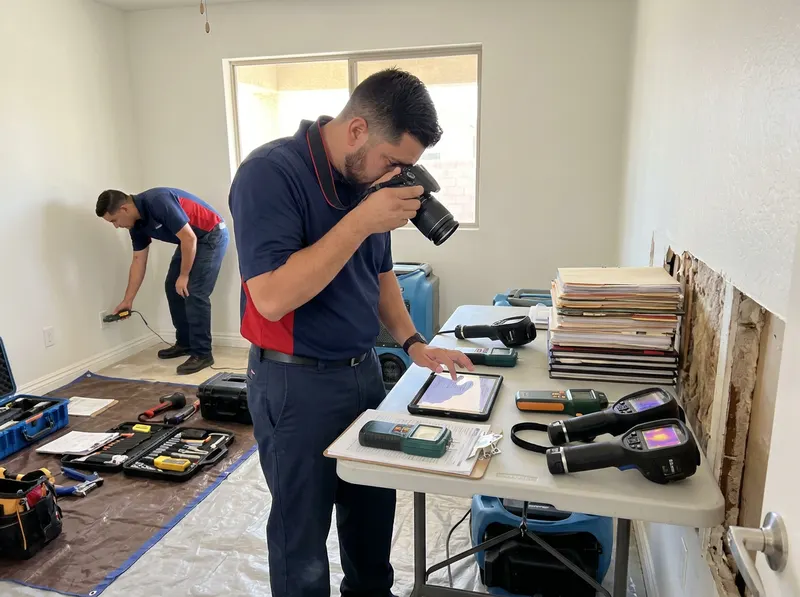
A water claim in Mesa is paid on evidence. Carriers approve or deny based on documented cause of loss, the moisture map, and a defensible scope of repairs. A drying job that is done correctly but poorly documented can still be underpaid, because the adjuster only reimburses what the file proves. Standard practice follows the IICRC S500 water-restoration guidelines and captures three things adjusters look for: the source and category of water (clean, gray, or black), moisture readings in walls and subfloor at each visit, and a materials list tied to the affected rooms. Homes across Mesa hit the same recurring losses, a burst supply line under a sink in Dobson Ranch, a failed water heater in a Sunland Village garage, or a slab leak surfacing through tile in Red Mountain Ranch, and each needs its own paper trail rather than a copied estimate.
Documentation and direct billing fit best when a claim is open with a carrier and the loss involves more than a mopped-up puddle. If damage is confined to a single towel-dry spill, a homeowner may pay out of pocket and skip a claim entirely; if drywall, cabinets, flooring, or insulation are wet, the file matters because those line items carry real dollars. The trade-off is straightforward: a self-pay repair moves faster with less paperwork, while a documented claim recovers covered costs but requires photos, moisture logs, and an adjuster review before final payment. For rentals in Eastmark, Augusta Ranch, or Alta Mesa, landlords often need the itemized file both for the carrier and for their own records between tenants.
The billing sequence is short. First, the scope is built in Xactimate-style estimating software that most Arizona carriers already recognize, so pricing lands in a format the adjuster reads without translation. Second, the completed scope, photo set, and moisture logs are submitted to the carrier and, when authorized, the invoice is billed directly to them rather than to the homeowner. Third, the homeowner is typically responsible only for the policy deductible, while covered restoration costs are settled between the restorer and the insurer. Mesa sits in Maricopa County, where clean-water drying jobs commonly document a 3-to-5 day timeline; that timeline and equipment count appear in the file so the adjuster sees why the invoice reads the way it does.
Documentation is not a repair, it is the record that gets the repair paid. Two edge cases change the answer. A denied or lapsed policy means there is no carrier to bill, so the work converts to a homeowner invoice. A long-standing, slow leak, the kind found behind a Mountain Bridge or Las Sendas shower pan, is sometimes ruled a maintenance issue rather than a sudden loss, which many policies exclude; the documentation still helps by dating the moisture and showing the affected area, even when coverage is contested.
Every job gets a firm, written price after a free on-site visit.
Tell us about your insurance claim documentation & billing job in Mesa and we'll send a clear, written quote, usually the same day.
 Water Damage Restoration Mesa