A burst pipe releases 4, 8 gallons per minute from a typical 1/2-inch supply line, so a break running unnoticed overnight can push hundreds of gallons into flooring and wall cavities. The first 60 minutes decide how…
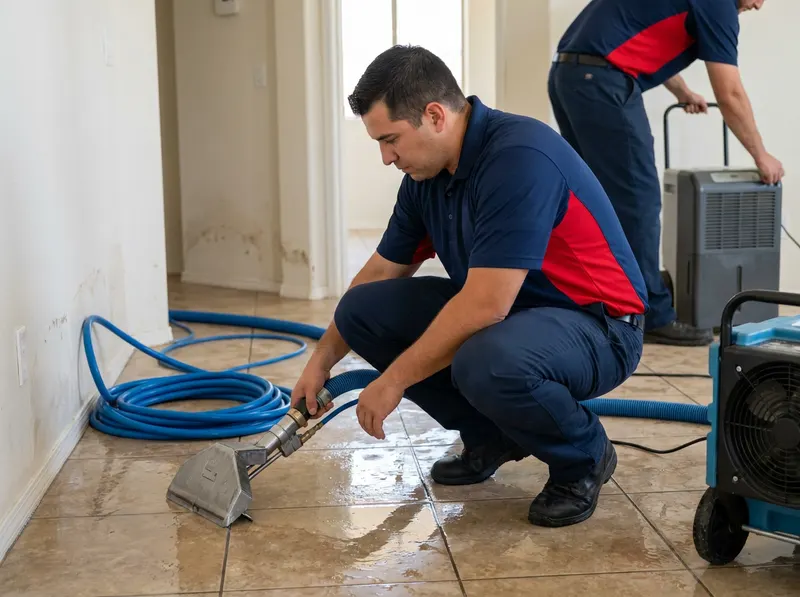
A burst pipe releases 4, 8 gallons per minute from a typical 1/2-inch supply line, so a break running unnoticed overnight can push hundreds of gallons into flooring and wall cavities. The first 60 minutes decide how far the damage travels: shut the main water valve, cut power to any flooded room at the breaker, and photograph the source and the wet area. In Mesa's slab-on-grade homes, common across Eastmark, Augusta Ranch, and newer Red Mountain Ranch construction, water spreads laterally under vinyl plank and along baseboards rather than sinking, which is why moisture often shows up two rooms away from the actual break.
Cleanup follows a set sequence. First, standing water is extracted with truck-mounted or portable units. Second, a moisture meter and infrared readings map how far water has wicked into drywall, subfloor, and cabinet toe-kicks. Third, unsalvageable materials, soaked drywall below the flood line, delaminated laminate, wet insulation, are removed. Fourth, air movers and dehumidifiers run for roughly 3, 5 days to pull structural moisture back to a dry standard, with daily readings logged. Fifth, restoration rebuilds what was removed. Older Mesa neighborhoods such as Sunland Village and Lehi frequently have original copper supply lines and galvanized fittings that corrode and split at threaded joints, while 1990s, 2000s homes in Dobson Ranch and Las Sendas are a common source of failed polybutylene and early PEX crimp connections.
The scope depends on where the line failed. A washing-machine hose burst in a Mountain Bridge laundry room usually stays contained to one or two rooms and dries in a few days. A slab-line break under a kitchen in Alta Mesa can require lifting cabinets and running dehumidifiers longer to reach hidden cavities. If the water sat under 24, 48 hours and stayed clean supply water, it is classified Category 1 and materials are more often salvageable; if it sat longer or backed up through fixtures, drying alone will not resolve microbial growth and affected porous materials are removed instead. A burst-pipe cleanup is not a plumbing repair, the pipe itself must be fixed by a licensed plumber before drying can complete, and that plumbing work is quoted separately.
Most supply-line failures in Mesa are covered under the sudden-and-accidental water clause of a standard homeowners policy; gradual leaks are commonly excluded. Documentation matters for the claim: moisture logs, photos of removed materials, and an itemized scope are provided so the file matches what the adjuster expects. A same-day site visit sizes the loss and confirms the exact price before any drying equipment is set.
Every job gets a firm, written price after a free on-site visit.
Tell us about your burst pipe & supply line cleanup job in Mesa and we'll send a clear, written quote, usually the same day.
 Water Damage Restoration Mesa