Emergency water extraction targets one goal: get liquid water out before it wicks into materials it cannot leave. Every hour standing water sits, it climbs drywall roughly 1 inch and migrates under baseboards and into…
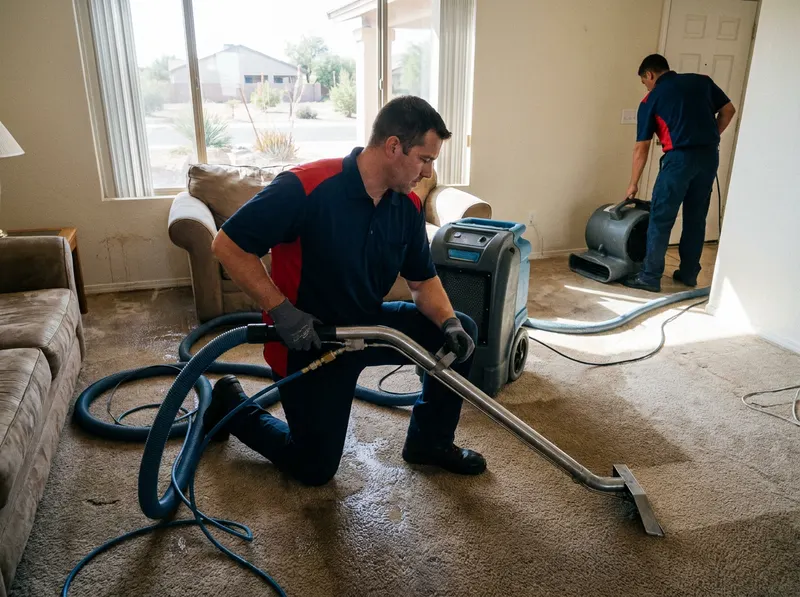
Emergency water extraction targets one goal: get liquid water out before it wicks into materials it cannot leave. Every hour standing water sits, it climbs drywall roughly 1 inch and migrates under baseboards and into subfloor seams, which is why extraction is measured in minutes, not days. A truck-mount unit can pull hundreds of gallons per hour; a portable extractor handles tighter interior spaces like a Sunland Village hallway or a second-floor Las Sendas bathroom where a hose to the driveway is impractical. Crews meter moisture with a pinless reader before and after each pass so the extracted area is documented, not guessed.
Mesa homes flood in patterns tied to how they are built. Slab-on-grade houses across Dobson Ranch, Augusta Ranch, and Alta Mesa spread water sideways fast because there is no basement to catch it, so a burst supply line under a kitchen sink can reach three rooms before anyone notices. Newer builds in Eastmark and Mountain Bridge often run water lines through the attic to second-floor baths, meaning a failed line drops water through ceilings into living space below. Homes near the Lehi area and the Salt River corridor see occasional monsoon and irrigation-related intrusion during Maricopa County storm season. Naming the source when calling matters: clean supply-line water, gray water from an appliance, and sewer backup each require different extraction gear and containment.
Extraction is the decision point that determines whether the next phase is simple drying or full demolition. If a Red Mountain Ranch great room floods with clean water and extraction begins within the first few hours, tile and engineered floors often dry in place with air movers. If the water is Category 3 sewage from a Superstition Springs backup, or clean water that sat overnight and soaked porous drywall and pad, extraction is paired with controlled removal of unsalvageable material. The trade-off is straightforward: fast, thorough extraction shrinks how much gets torn out later, while a delayed or partial pump-out usually forces more flooring and drywall replacement.
How the first visit works, in order: (1) the crew locates and helps stop the water source or confirms it is shut off; (2) standing water is pumped and vacuumed from the lowest points outward; (3) the affected area is metered and mapped; (4) baseboards and cove base are checked for trapped water behind them; (5) the crew hands over a written scope and a ballpark for drying so the homeowner sees the plan before equipment is set. Extraction and drying are separate line items, so the pump-out cost is known before any structural drying begins.
Every job gets a firm, written price after a free on-site visit.
Tell us about your emergency water extraction job in Mesa and we'll send a clear, written quote, usually the same day.
 Water Damage Restoration Mesa