Water damage restoration in Mesa, AZ starts the moment standing water touches drywall, flooring, or subfloor, because in Arizona's dry heat water wicks into porous materials fast and the clock on mold starts inside 24 to 48 hours. A Mesa crew extracts the water, sets commercial air movers and dehumidifiers, monitors moisture daily until framing and drywall read dry, then handles the rebuild.

Water damage restoration in Mesa is the process of extracting standing water, drying structural materials, and repairing a home after a burst pipe, appliance leak, or monsoon flood before mold and rot set in.
Every service reflects the same meticulous attention to detail, whether it's a single job or a larger water damage restoration project across Mesa.
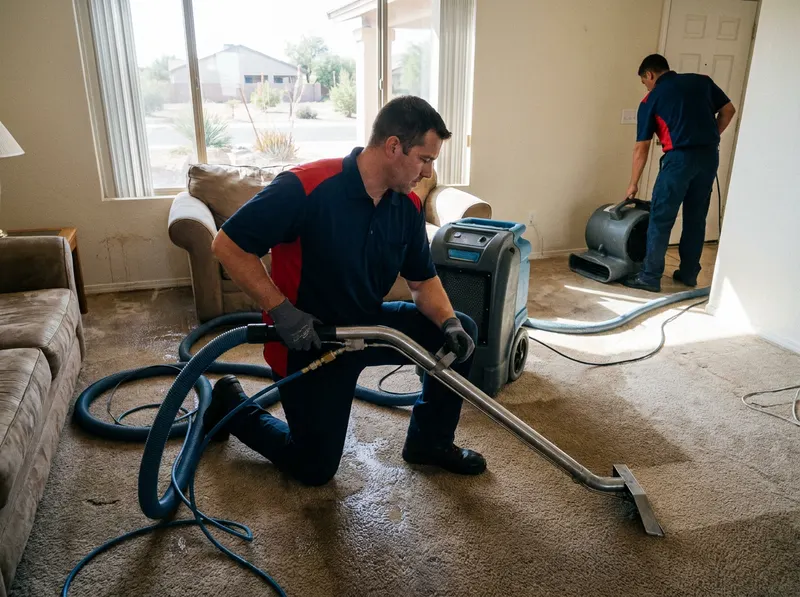
Truck-mounted and portable extractors pull standing water from floors, carpet, and pad the same day. A single room of standing water is typically extracted in one to two hours; the sooner extraction starts, the less water wicks up into baseboards and drywall. Extraction is billed roughly $500 to $1,400 for one room of clean water and is the first step on almost every job, because every hour of standing water widens the drying footprint and the eventual repair.
Get a quote →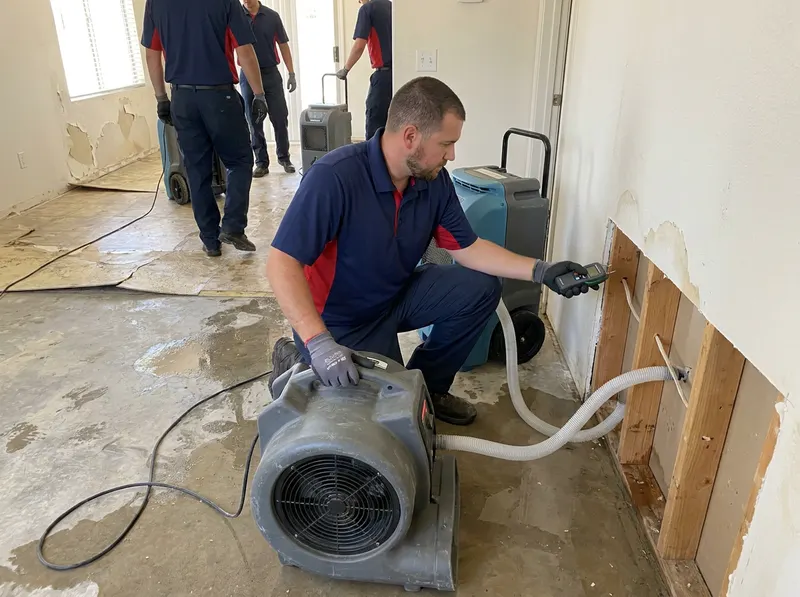
Commercial air movers and low-grain refrigerant dehumidifiers dry framing, subfloor, and drywall over 3 to 5 days. Moisture readings are logged daily until wood framing reads below roughly 16 percent and drywall returns to dry-standard per IICRC S500 targets. A typical single-room dry-out runs $1,200 to $2,800, and Arizona's low ambient humidity shortens drying time compared with humid climates, though slab-on-grade construction common in Mesa holds moisture in the subfloor longer than the surface suggests.
Get a quote →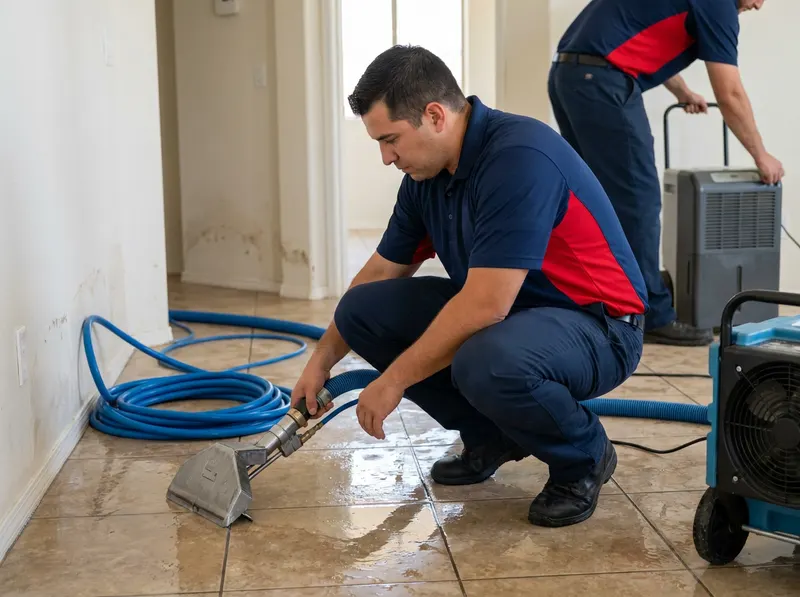
Cleanup for sudden pipe failures, cracked supply lines, and failed shut-off valves, the most common covered water-damage claim. Work covers extraction, drying, and coordination with a plumber so the leak is stopped before drying begins. Combined pipe cleanup and drying typically runs $1,500 to $4,000. Older Mesa neighborhoods with aging galvanized or polybutylene supply lines see more of these failures, and clean supply-line water is category-1, meaning the drywall can often be dried in place rather than removed.
Get a quote →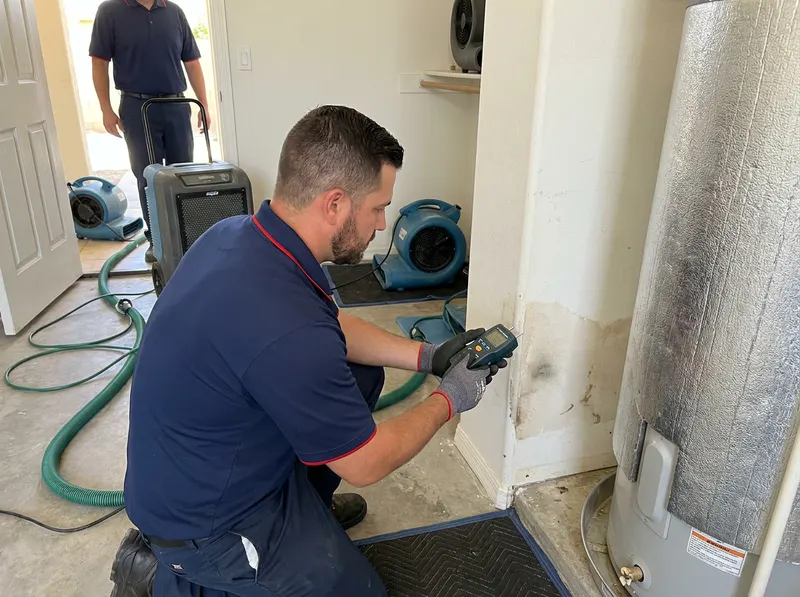
Restoration for water heater tank failures, washing machine hose bursts, dishwasher leaks, and refrigerator supply-line drips. These leaks often soak flooring and adjacent walls in a laundry room or garage before anyone notices, and a failed 50-gallon water heater can release its full tank in minutes. The Valley's hard water shortens tank and flexible-hose life, so appliance leaks are a steady year-round source of damage separate from the monsoon flood spike.
Get a quote →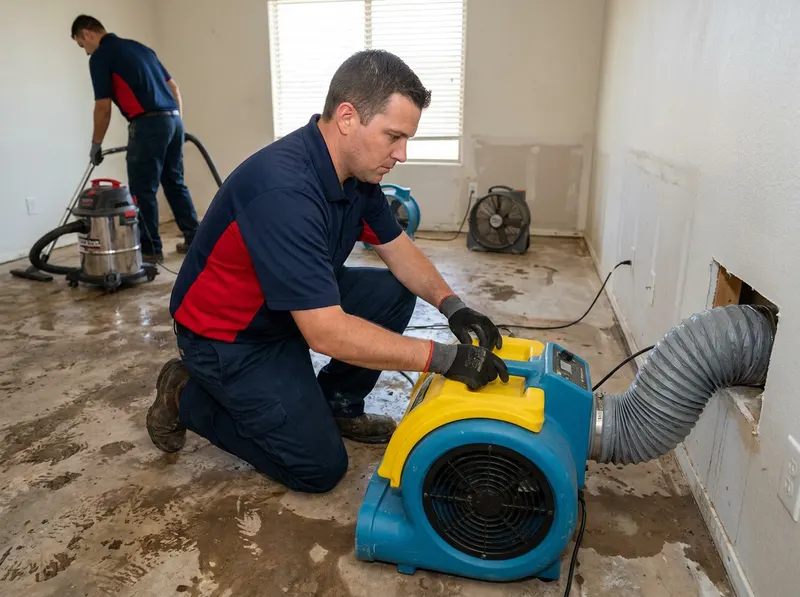
Cleanup for storm-driven flooding, roof leaks, and yard runoff that enters a home during monsoon season. Ground-water and outdoor storm water is treated as category-2 or category-3 and handled with antimicrobial cleaning. Demand for this work peaks in June and September, when a single microburst rolling off the Superstition foothills can push water under a garage door overnight. Whole-floor storm floods commonly land in the $3,500 to $9,000-plus range depending on how far the water spread.
Get a quote →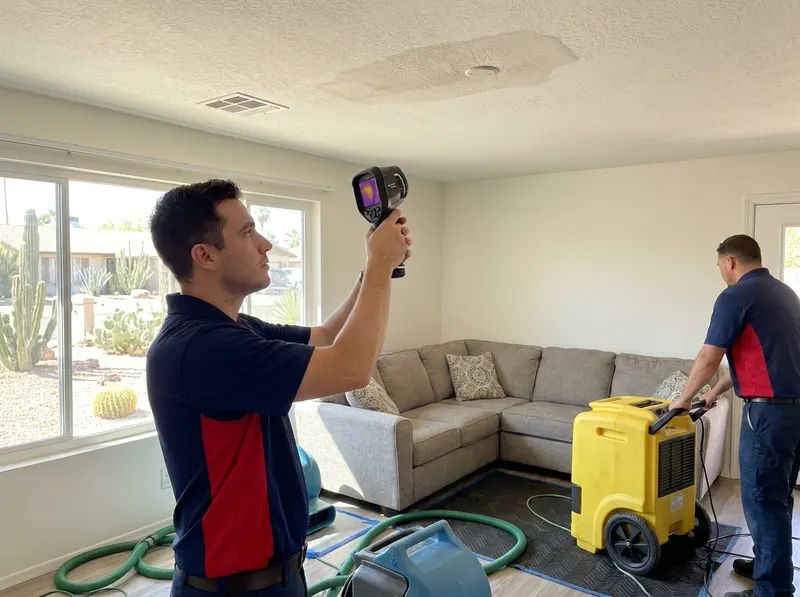
Drying for water that tracks through a ceiling from a roof leak, upstairs bathroom, or HVAC condensation line. Wet insulation is removed and cavities are dried before the ceiling is patched to prevent staining and sag. A brown ring on a ceiling usually means water pooled above the drywall for hours, so the cavity is opened and dried rather than painted over, which only hides active moisture.
Get a quote →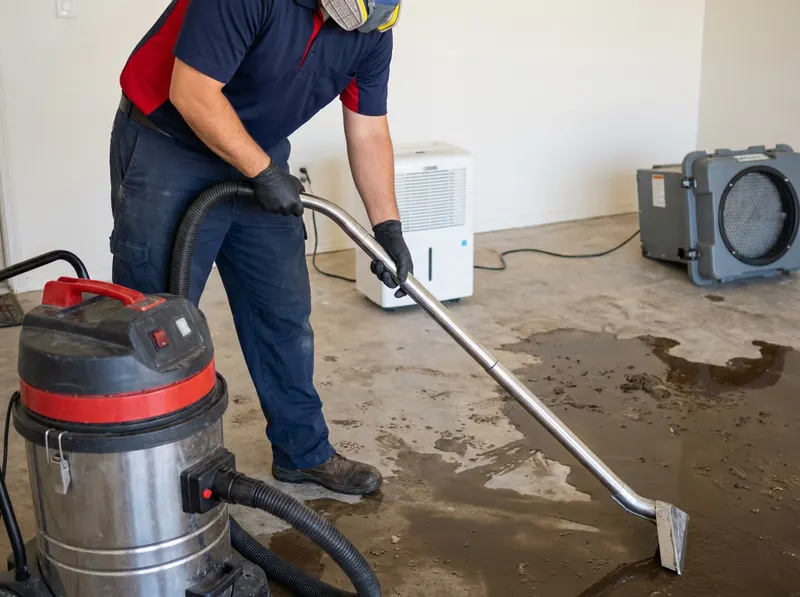
Extraction and disinfection for sewage backups and contaminated black water. Porous materials that contacted category-3 water are removed, and hard surfaces are cleaned with EPA-registered antimicrobials per IICRC S500 guidelines. Category-3 jobs typically run $3,000 to $8,000 because drywall, carpet, pad, and other porous materials are removed rather than dried, which is the safe standard whenever sewage or drain overflow is involved.
Get a quote →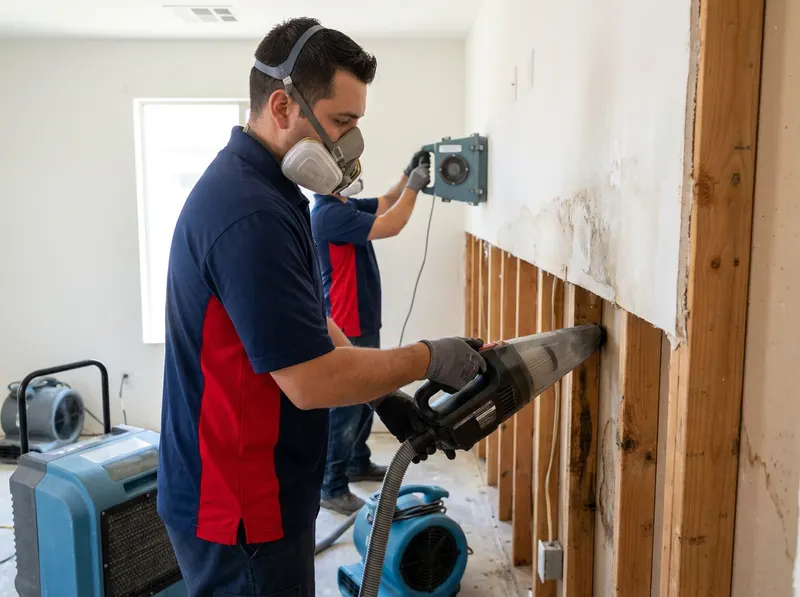
Containment, HEPA filtration, and removal of mold that developed from an untreated or hidden leak. Sealed containment keeps spores from spreading to unaffected rooms during removal, and remediation typically runs $1,200 to $5,000 depending on the affected area. Mold can begin growing in wet drywall within 24 to 48 hours, which is why untreated slow leaks behind cabinets and inside wall cavities are the most common cause of a mold job in Mesa.
Get a quote →You get a firm, itemized quote for your water damage restoration before any work begins, no surprises, no pressure.
Careful prep, tidy work, and a full cleanup when we are done. We treat your home and belongings like our own.
The same trusted, background-checked team from the first call to the final check.
Match the response to the water source. If a supply line or water heater burst and the water is clean, choose emergency extraction plus structural drying; three to five days of air movers usually saves the drywall and flooring without demolition. If water sat for more than 48 hours or reached carpet pad and subfloor, choose drying with selective removal, because trapped moisture under flooring reads high on a moisture meter long after the surface feels dry.
If the source was a sewage backup or a drain overflow (category 3), choose full extraction with antimicrobial cleaning and removal of porous materials; the trade-off is more demolition and higher cost, but leaving contaminated drywall in place risks bacterial growth. If mold is already visible or the leak was slow and hidden, choose remediation with containment rather than surface drying alone. If the damage is a single wet spot on a ceiling from a slow roof leak, choose targeted cavity drying and insulation removal rather than opening the whole ceiling.
The general rule: faster water removal means less demolition, and less demolition means a lower total bill. A category-1 clean-water dry-out on the low end runs near $1,200, while a category-3 whole-floor loss can pass $9,000 once porous materials are removed and rebuilt, so the source and the sit-time drive the number more than the square footage does.
Every project gets a firm, written price after a free on-site visit. Ranges below for orientation.

Mesa homes span decades of construction, and the plumbing tells the story: older neighborhoods like Dobson Ranch and Sunland Village still carry aging galvanized and polybutylene supply lines that split under pressure, while newer builds in Eastmark and Mountain Bridge lean on slab foundations where a hidden leak can travel across a concrete pad before it ever surfaces at a baseboard. The Valley's hard water is the quiet culprit; mineral scale corrodes water heaters and shortens the life of flexible supply hoses across every zip code from Alta Mesa to Augusta Ranch. Monsoon storms rolling in off the Superstition foothills near Usery Mountain Regional Park drive the summer flood spike, when a single microburst can push water under a garage door or through a roof penetration overnight. The July-to-September storm season is also when Red Mountain Park and the wash lines near the Salt River in Lehi see the fastest runoff, so low-lying lots and homes with older roofs take the brunt. Winter brings a second, smaller wave: holiday cooking and full guest bathrooms strain drain lines and older shut-off valves in established areas like Superstition Springs and Sunland Village, and the occasional cold snap can crack an exposed hose bib on a garage wall. Slab-foundation homes across the East Valley add a specific challenge, because a leak under the pad wicks up through flooring and reads dry on the surface long after the subfloor is soaked, which is why a moisture meter, not a hand on the tile, decides when a Mesa dry-out is actually finished.
 Water Damage Restoration Mesa